
For more than two decades, Dr Ryan Prox has used i2 solutions to transform how organisations understand crime, share intelligence and make critical decisions in law enforcement.
From modernising Vancouver Police Department’s intelligence capability to building one of the largest law enforcement i2 repositories in the world, to cracking a landmark serial child sex offender case to shaping EU‑level reforms and academic programmes, i2 has been a constant thread in this trailblazer’s very impressive career.

“A lot of these agencies were literally struggling with adoption of technology, and by introducing Analyst’s Notebook and iBase… they kind of went from zero to 60 very quickly,” said Ryan, modestly. “It’s not a hard system to implement… it’s very user‑friendly.”
This case study highlights how Ryan has repeatedly chosen and applied i2 solutions, such as Analyst’s Notebook and iBase, to achieve impact at local, provincial, national and international levels.
Ryan’s relationship with i2 began before he ever joined municipal policing, during his work in the defence sector. “I started using i2 in defence, and it was like the very rudimentary version from the early 90s,” he says. In defence, Ryan was used to advanced geospatial and analytic capabilities, but the contrast when he moved into law enforcement was stark.
“I was in a bit of shock when I transitioned from defence over into law enforcement, how behind they were, in technological terms,” says Ryan. “I was used to logging in and clicking on a couple things and I could get everything I needed, and it was like, ‘Oh, no, we have pin maps and spreadsheets.'"
This technological lag in policing presented an opportunity for Ryan: to use i2 as a lever for organisational change.
When Ryan joined Vancouver Police Department (VPD), he was recruited to help start an intelligence analytic unit. On arrival, he found a traditional, analogue environment. Drawing on his defence experience, he introduced i2 alongside Esri ArcGIS, the “global standard in geospatial software”. It was a shift from intelligence work as “paper and memory” to “structured, searchable, linkable data”, says Ryan.

Geospatial analysis was integrated into day‑to‑day intelligence through i2 and Esri. The intelligence unit was now able to support complex, fast-moving investigations, rather than just producing static charts.
Ryan’s success at VPD set the stage for the even more ambitious project of a province‑wide intelligence platform.
Ryan went on to architect what he describes as the “largest law enforcement i2 repository in the world” (excluding the classified “three‑letter” agencies). The system is known as CRIME (Consolidated Records, Intelligence, Mining Environment).
In British Columbia, all police agencies feed into a common records system. Ryan’s team started to extract that data four times a day and loading it into iBase for intelligence analysis. “We go back to 2005 provincial‑wide,” he says. “We have half a billion records, just police records data.” While some of the data is regularly purged through Provincial Privacy & Retention rules, policing is still left with critical data related to the most heinous and serious crime.
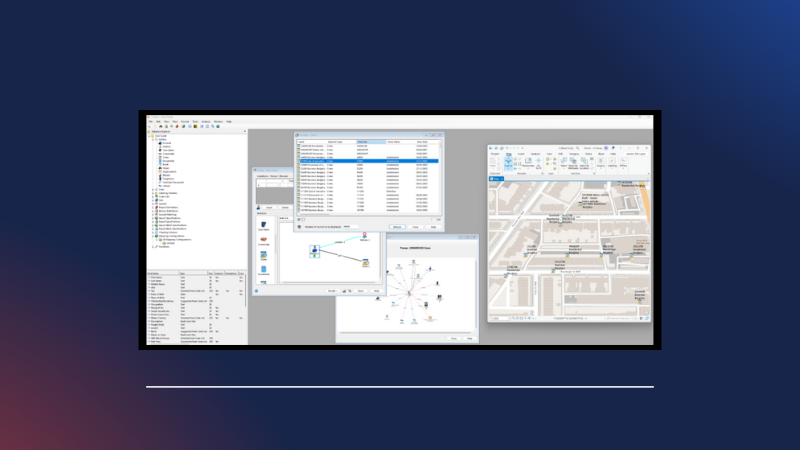
This gave analysts a single, searchable, analytical environment powered by i2, covering all police records across the province, criminal investigations and intelligence files and nearly two decades’ worth of historical data.
Rather than keeping this capacity within Vancouver alone, Ryan invited independent municipal police departments to come onto the platform. “I said, why don’t you buy some licences on our system, and then we’ll let you in and access your own licences on our infrastructure. But then you participate in the provincial data warehouse repository. And everybody agreed to that.”
Through i2 Analysis Hub and iBase, these agencies now:
access their own data and the province‑wide repository via secure virtual desktops
conduct link analysis, network mapping and intelligence queries beyond municipal boundaries
share a common analytic language and toolset across British Columbia
“Outside of ‘secret squirrel agencies’, as I call them, we’re the largest law enforcement user of iBase data in the world by i2 standards,” says Ryan.
With both CRIME and the intelligence files iBase in place, British Columbia agencies moved to a data‑driven approach to organised crime.
“Organised crime wise, gang crime wise, it’s really helped coordinate,” says Ryan. “We do what’s called provincial organised crime threat assessments. We do a provincial prioritisation of which organised crime group we should uniformly target.”
The result is a more precise, proactive posture. “It cuts down on street violence, because we’re on top of it,” he says. “As soon as something starts evolving, we already know who the players are and then we can develop interdiction strategies, which literally cuts down on the gang violence and shootings.”
i2 is providing the analytic backbone that makes this possible.
Perhaps the most compelling illustration of Ryan’s use of i2 is the notorious case in Vancouver of serial child sex offender Ibata Hexamer.
For over a year, multiple agencies and a team of 80 officers struggled to identify the offender, despite extensive traditional work. “They did what we call demand DNA, 561 individuals that were known and registered sex offenders, and they came up with a big goose egg - no viable suspects,” said Ryan.
Ryan and a Dutch National Police officer were asked to take a fresh look, specifically from an analytic perspective. Together, they processed a mass of telecoms data through iBase, used Analyst’s Notebook and Esri for geospatial triangulation and then crunched the numbers, narrowing down thousands of numbers to just a few. From there, they homed in on their suspect.
Surveillance obtained a discarded coffee cup, and DNA analysis confirmed the match with overwhelming probability. “We grabbed that coffee cup, flew it back to Ottawa and got a one in six quadrillion match on the DNA,” says Ryan. Hexamer was later designated a ‘dangerous offender’, one of only a handful in Canada, meaning he is unlikely ever to be released.
“It was a landmark case,” says Ryan. “The entire case rested on analytics. It was transformative for the VPD as the first major crime not solved through traditional investigative techniques.” The methodology has since been written up as a global training example.
"There's a textbook called 'The Seven Essentials of Analytics,' in which one chapter details the challenges of traditional policing practices and hails analytics as a transformative approach to modernizing law enforcement. The Hexamer case highlighted how limited resources—just two specialists—could use i2 technology to crack a case after a large joint-forces operation had spent a year of intensive work without progress," Ryan says. "They use it as a case study for training at a global level."
i2 was central to turning scattered data into a solvable case.
At Simon Fraser University (SFU), in Vancouver, Ryan pushed to establish a dedicated i2 and Esri lab.
He uses it to teach intelligence analysis, analytics and law enforcement to the next generation of analysts and officers. Ryan also persuaded i2 to extend its academic programme to include the Esri connector, recognising that geospatial integration is now core to real‑world intelligence work.
More recently, Ryan has been appointed a full professor at the European Forensic Institute in Malta, with a mandate to stand up and manage a forensic lab built on iBase, Analyst’s Notebook and Esri.
“My job is to teach iBase and Analyst’s Notebook courses, but to also manage the licencing and use of the lab and to establish the lab itself and stand it up,” says Ryan.
The Institute serves working law enforcement practitioners who are formalising their education, helping to embed i2 into day‑to‑day practice across Europe.
For the European Union, Ryan has led needs assessments in countries working towards closer alignment or accession, most notably Georgia. Here, he then led a train‑the‑trainer curriculum to ensure the country’s law enforcement analytics programme, with i2 as the backbone, would be self‑sustaining.
Having built multiple major systems and evaluated alternative platforms, Ryan is very clear: “As an end customer, everything we do, we build in‑house, with a few exceptions where we need to ask for professional service support from i2.”
And he sees i2 as an enabler of change, not just a tool. “It empowers the organisation to control their own deployment and get a finalised system that meets their needs versus contracting out back to the company to get anything done,” says Ryan.
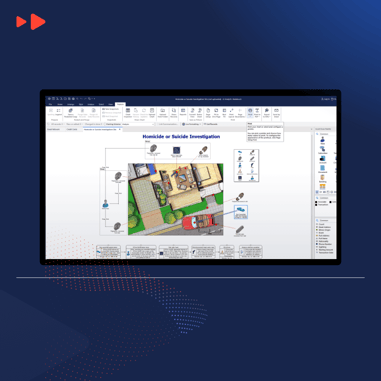
From serial predator cases to organised crime, from provincial intelligence platforms to EU‑wide reform and academic programmes, i2 has been central to Ryan’s ability to build, scale and sustain modern intelligence capabilities.
“I would say it’s been instrumental in organisational change management in police and law enforcement agencies that are very tradition‑based, to adopting technology that would create efficiencies and effectiveness that they wouldn’t normally have available to them,” says Ryan.
In short, i2 has not just supported Ryan’s work - it has enabled him to redefine what’s possible in law enforcement intelligence.
See how i2’s market-leading solutions are used globally in some of the most demanding operational environments. Request a demo to explore how they support real-world decision-making.





© 2026 i2 Group / N. Harris Computer Corporation. All trademarks owned by N. Harris Computer Corporation.
1 Cambridge Square, Milton Avenue, Cambridge, CB4 0AE, UK