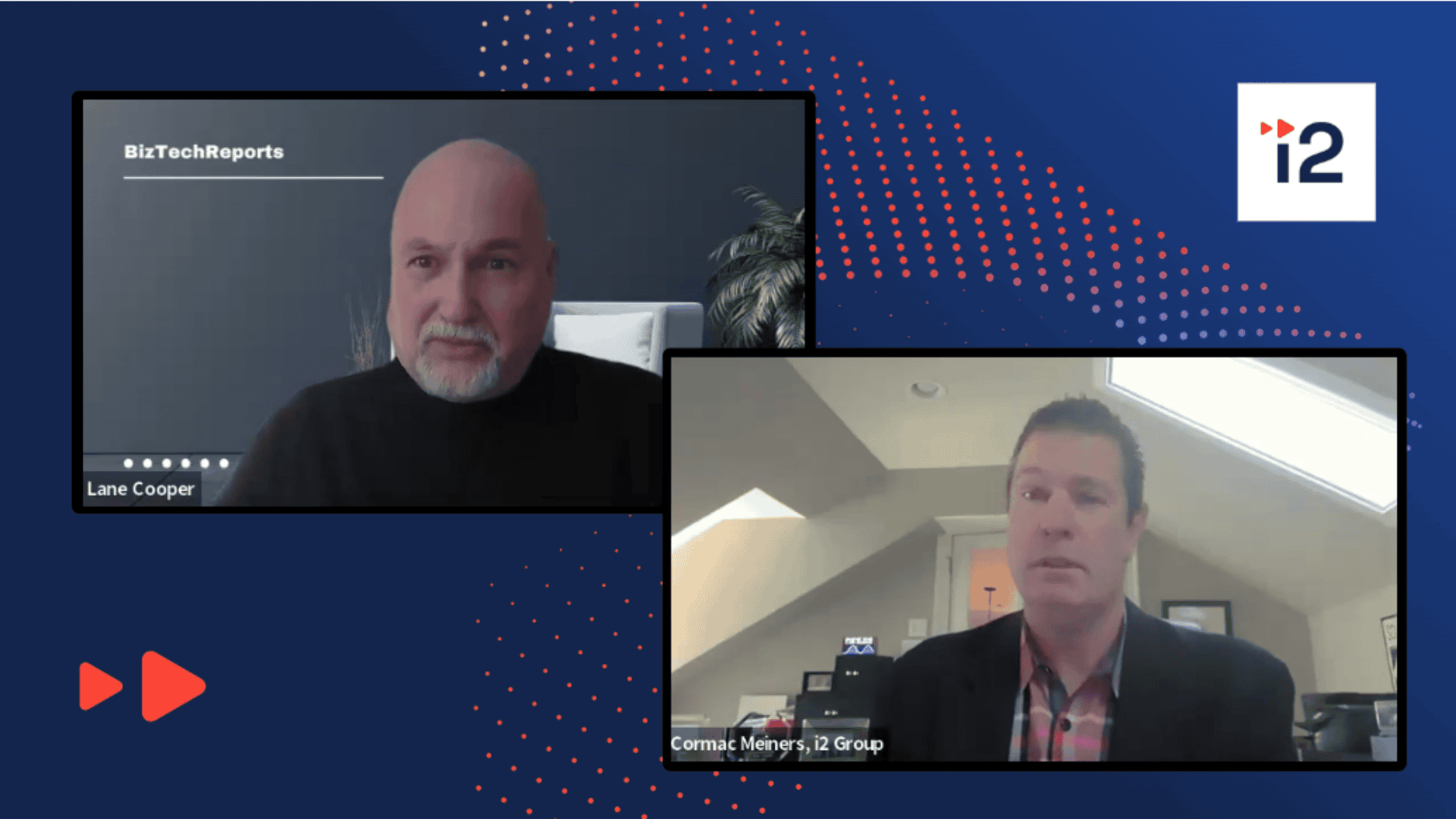
Even before the U.S. government launched Operation Epic Fury, intelligence analysts and defense technologists had re-emphasized the threat posed by Iran’s complex and decades-old web of partners operating throughout the Middle East, Latin America and the United States. As retired Green Beret Cormac Meiners, i2 Group’s federal lead for the Department of War and the intelligence community, argues, this longstanding, and growing global threat requires an urgent response across multiple fronts.
The launch of Operation Epic Fury in early 2026 is just the latest development in a broader conflict that has been building, relationship by relationship, across four decades and multiple continents. The threat posed by Iran is a longstanding one that stretches beyond the immediate theatre of conflict into the wider Middle East through to Latin America and even the United States.
The Iranian revolutionary regime sits at the center of an intricate web of global proxy networks and drug cartels in Latin America whose diffuse and often hidden connections present increasing risks to U.S. security. Consequently, this requires a radical and urgent rethink around how we approach data gathering and analysis, and the use of artificial intelligence (AI) tools to combat the threat posed.
Shortly after Operation Epic Fury commenced, Iran orchestrated a host of rapid developments within and beyond the immediate theater of conflict; the restriction on tanker traffic through the Strait of Hormuz; Hezbollah’s re-entry into the wider conflict; Iraqi militias striking U.S. targets; and U.S law enforcement agencies investigating potential acts of terrorism at home.
Iran’s proxy network dates back decades and the nature of the threat the regime presents can be seen in its resilience. Despite significant disruption to its leadership structure, Iran’s religiously motivated paramilitary and broader regional partners still have the capacity and capability to inflict significant damage.
Iran’s reach extends to the United States where sympathetic groups have spent decades constructing intricate financial networks and logistical operations.
The Iranian regime has developed cells that operate smuggling rings, commit fraud and carry out money laundering to fund its global interests. To give one example, there is a Hezbollah-linked network in North Carolina that purchased untaxed cigarettes and transported them to Michigan in the late 1990s and early 2000s. This nefarious activity generated substantial revenue for the Iranian Revolutionary Guard Corps.
Since the start of Operation Epic Fury, this network has stepped up its activities and U.S. law enforcement is investigating a series of domestic incidents, including an attack on a synagogue in Detroit, as potential acts of terrorism.
Increasingly, U.S. intelligence analysts have identified a growing convergence between Iranian proxies and major drug cartels, which have nascent nation-state capabilities, namely drones, cyber capabilities and advanced weaponry.
The escalating risk that these relationships pose demands an investment in the analytical resources that can match the depth of this growing threat. One of the most significant, albeit underutilized assets that U.S. intelligence can tap into is the body of analysis produced during the global war on terror. We are talking about the thousands of detailed link charts mapping militias in the Middle East that are likely to be sympathetic to Iran and consequently are incredibly relevant for understanding the current threat.
To respond effectively, however, U.S. counterterrorism, law enforcement agencies and the Drug Enforcement Administration must pool together, bridging their separate protocols and systems to prevent connections, for example, between a cartel logistics coordinator and a Hezbollah facilitator from being missed.
I2 Group’s analytical tools are already deployed globally throughout law enforcement and partner nations to integrate data from different intelligence threads, including battlefield sensors, so we can ensure all this data is compatible and creates context that is useful in real time. We have the technology at our disposal; the real challenge is organizational.
That said, the current conflict has accelerated efforts to resolve this challenge with joint interagency taskforces working at speed and full capacity to get around the classification structures and agency cultures that can prevent criminal justice and counterterrorism data streams from operating in tandem.
One of the biggest intelligence assets at our disposal is AI, which is helping analysts to better and more accurately identify targets. However, that only works for conventional targeting.
If the asymmetric nature of this conflict continues to spread, which will require a detailed understanding of human networks, then that is where precise visual analytics such as the i2 Analyst’s Notebook offers the most effective tool to engage.
Iran’s ability to extend its reach beyond its homeland is being degraded as we speak, but the urgency in mapping the depth and extend of its network of proxies remains a strategic priority. As long as significant players remain active in territories as far flung as Lebanon, Latin America and the United States, intelligence analysis to fully grasp how these parties are reconnecting remains a necessity.
See how i2’s market-leading solutions are used globally in some of the most demanding operational environments. Request a demo to explore how they support real-world decision-making.


.png?width=150&height=75&name=Cyber%20Ess%203%20MONO%20(1).png)


© 2026 i2 Group / N. Harris Computer Corporation. All trademarks owned by N. Harris Computer Corporation.
1 Cambridge Square, Milton Avenue, Cambridge, CB4 0AE, UK