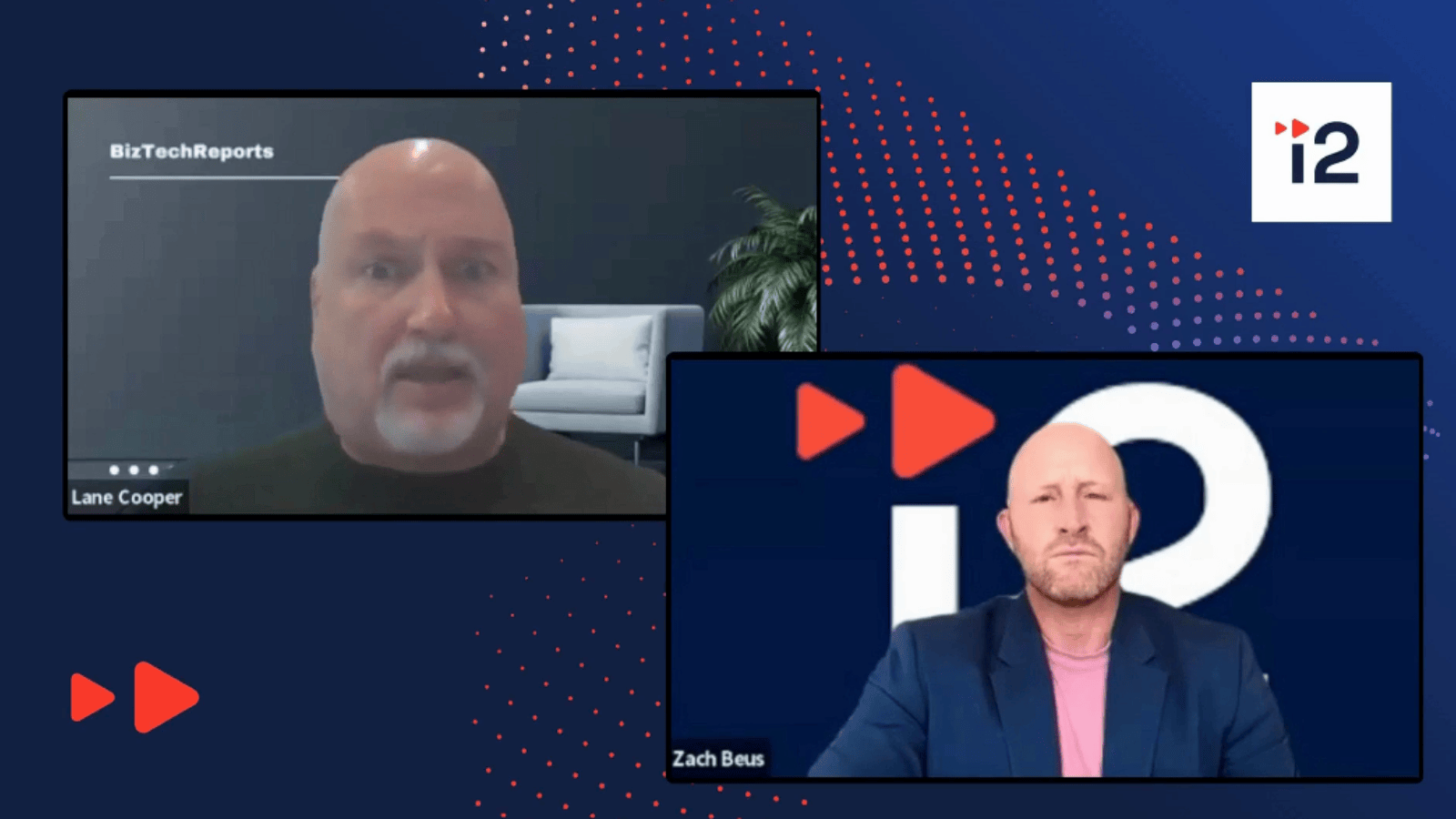
Faced with diverse and growing data streams within a fast moving, fractured and siloed intelligence picture, Zach Beus, National Security Lead at i2 Group, offers a proactive solution, one that requires U.S. border security agencies to draw on artificial intelligence (AI), data integration and shared analytic standards.
U.S. Customs and Border Protection (CBP), Immigration and Customs Enforcement (ICE) and other agencies really need to overhaul their approach to intelligence analysis if they are to respond effectively to what are becoming increasingly sophisticated threats to border security.
The sheer breadth and scale of the data they collect can be daunting – everything from shipping manifests, travel records, sensor feeds, financial intelligence and intelligence from social media. The challenge is that much of this falls into siloed databases that restrict analysts from gaining an accurate oversight of the entire intelligence picture in real time.
What they need are common visualization platforms that can integrate structured, semi-structured and unstructured sources of data concisely, quickly and with ease.
This issue was highlighted in a recent Gartner study on government productivity and AI that singled out legacy systems and fragmented data as the biggest obstacles to unlocking the benefits of deploying AI in intelligence and other national security applications. The headline conclusion the study drew was that integration and governance, not just new tools, are critical for success.
How AI redefines analytical work
AI’s potential to enhance the intelligence analyst’s work is clear cut. The ease at which machine learning and natural language processing can automate essential tasks such as link analysis and pattern detection means analysts can now focus on the context and intent of what is going on. Whereas historically analysts have focused on the “who”, “when”, “where” and “how”, AI enables the analyst to focus more on the “why”.
And this isn’t a theoretical game-changer. It is already happening in practice on the front line. A recent ISC AI Pulse survey reveals that 70% of security professionals that use AI-enabled tools have credited them with improving analytical effectiveness. One of the main takeaways from the survey findings is that AI removes repetitive data sorting so the human operator can focus on the higher-value tasks.
That said, as much as AI can enhance intelligence analysis, it is important, as a safeguard, that border security agencies first agree common protocols for its use before deploying this advanced technology in case lawyers require them to divulge how their AI-derived data was sourced.
The Cloud Security Alliance’s “State of AI and Security” survey in 2024 touched on this very issue. It found that, while a sizeable number of IT and security leaders cited AI’s ability to enhance threat detection, feedback from those canvassed also underlined the importance of being transparent and operating standardised systems to maintain trust and accountability.
The latest developments, however, are positive. The speed at which AI is being developed means the applications are rapidly maturing at pace. At the same time, border security agencies have put in place enhanced oversight measures to provide the legal safeguards mentioned earlier. The purpose of these audit practices and frameworks is to explain to third parties how the AI algorithms draw their conclusions.
Resource allocation and efficiency gains
One of the most important deliverables that AI provides is cutting workloads so that border security agencies can reallocate their scarce resources.
To give an example, where previously a hundred analysts may have been deployed to sift through and scan manifest logs, the AI solution reduces this number to 10 analysts, freeing up the other 90 to focus on resolving long-term intelligence gaps. This ability to conduct strategic assessments that previously weren’t feasible with the resources available means the border security agencies can be far more effective in their analytical work.
i2 Analyst's Notebook adds to the toolbox
With its extensive and longstanding experience in supporting defense, law enforcement and intelligence organizations, i2 Group continues to modernize i2 Analyst’s Notebook with new features to enhance border security agencies’ analytical work. These tools aim to simplify visualization, collaboration and shared data analysis, for example, through digital files, PowerPoint checks or wall-sized maps for operational planning.
These new features include a natural language processing tool called TextChart, automated insights and geospatial mapping.
The first, TextChart, allows analysts to drag and drop in unstructured documents after which the system automatically extracts entities, links and properties.
The automated insights meanwhile normalize and visualize data sourced from spreadsheets instantly, enabling the analyst to create dashboards that highlight critical connections.
Finally, the geospatial mapping allows the analyst to visualize, in close to real-time, the movement of phones, vehicles or people. This triangulation provides the analyst with predictive insights into trafficking or migration patterns.
Collaboration key in combating crime
The growing sophistication in threats that border security agencies face underlines the critical importance of a collaborative and joined-up approach in which multiple agency partners deploy a blend of cutting-edge software tools integrated with legacy systems and expertise.
As things stand, we are in a really strong position to leverage both people and technologies. All we need to do is put the right emphasis, at the right time, to help support analysts on the front lines.
-
Note: This article is based on an interview and article that appeared on BizTechReports. Click here to visit the original article.

.png?width=150&height=75&name=Cyber%20Ess%203%20MONO%20(1).png)